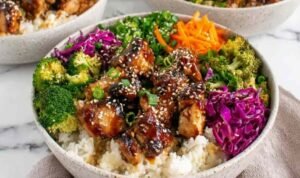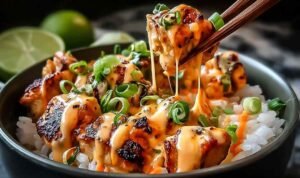

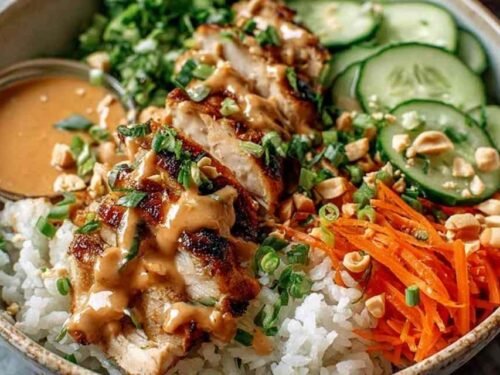
Thai peanut chicken buddha bowl is the recipe I make when I want something that feels fresh and satisfying without spending more than 20 minutes in the kitchen. The first time I put this together I had no real plan, just chicken, a jar of peanut butter, and some vegetables that needed using. The homemade sauce came together faster than I expected and tasted so much better than anything I had ordered in a while.
What keeps this thai peanut chicken buddha bowl in regular rotation is the combination of texture and flavor in every bite. Tender golden chicken, crisp fresh vegetables, and a creamy peanut sauce that clings to everything rather than pooling at the bottom. It delivers over 30 grams of protein per serving, works beautifully for meal prep, and is fully customizable based on whatever vegetables you have on hand. Try this one tonight!
Table of Contents
Ingredients for Thai Peanut Chicken Buddha Bowl
I always use natural peanut butter with no added sugar for the sauce because it blends smoother and the flavor is cleaner against the soy sauce and rice vinegar. Here is everything you need:
For the Chicken:
- 1 lb boneless skinless chicken breast (sliced into 1/2-inch strips against the grain)
- 1 tsp garlic powder
- 1 tsp ground ginger
- 1/2 tsp salt
- 1/4 tsp black pepper
- 2 tbsp olive oil for cooking
For the Bowl Base and Vegetables:
- 3 cups cooked brown rice or quinoa (about 3/4 cup per bowl) – I recommend brown rice for a nuttier flavor that holds up under the peanut sauce
- 1 cup carrots, julienned or shredded
- 1/2 cup English cucumber, thinly sliced
- 1/4 cup red bell pepper, thinly sliced
- 1/4 cup edamame, shelled and cooked
For the Creamy Peanut Sauce:
- 1/3 cup creamy peanut butter, natural preferred
- 2 tbsp low-sodium soy sauce
- 1 tbsp rice vinegar
- 1 tbsp honey
- 1 tsp sesame oil
- 2 tbsp warm water, added gradually – in my experience adding cold water causes the peanut butter to seize so always use warm
For Garnish:
- 2 green onions, chopped
- 1 tbsp sesame seeds, toasted if possible for extra flavor
Step-by-Step Instructions
I recommend prepping all your vegetables and measuring the sauce ingredients before you start cooking so everything is ready the moment the chicken comes off the heat.
Step 1: Season the sliced chicken strips with garlic powder, ground ginger, salt, and black pepper. Let the seasoned chicken sit at room temperature for 5 minutes. This short rest is worth it as the flavors penetrate the meat more effectively than seasoning right before cooking.
Step 2: Heat olive oil in a large skillet over medium-high heat until shimmering. Add chicken strips in a single layer and cook for 3 to 4 minutes per side until golden brown and cooked through to an internal temperature of 165 degrees F with no pink remaining. Avoid crowding the pan or the chicken will steam rather than sear and you will lose the golden crust.
Step 3: While the chicken cooks, whisk together peanut butter, soy sauce, rice vinegar, honey, and sesame oil in a small bowl. Add warm water one tablespoon at a time, whisking after each addition, until the sauce drizzles easily from the back of a spoon. If the sauce becomes too thin, let it sit for 2 to 3 minutes and it will thicken back up on its own. Do not add cold water as it can make the sauce seize.
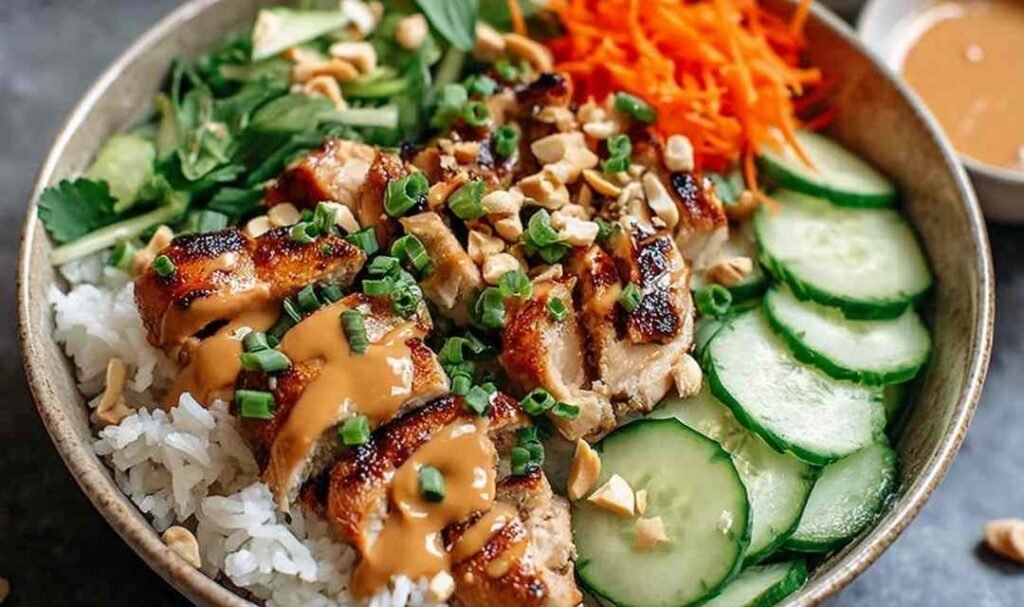
Step 4: Divide the cooked rice or quinoa evenly among four bowls, about 3/4 cup per bowl. Arrange the carrots, cucumber, red bell pepper, and edamame in separate colorful sections around the grain base.
Step 5: Top each bowl with sliced chicken, about 4 oz per serving. Drizzle 2 to 3 tablespoons of peanut sauce over everything and finish with chopped green onions and sesame seeds. Serve immediately for the best texture and crunch from the vegetables.
Best Pairings for Your Thai Peanut Chicken Buddha Bowl
A few simple sides and companion recipes take this bowl from a quick weeknight dinner to a full spread worth sharing.
Asian Slaw with Rice Vinegar Dressing: A crisp, tangy slaw adds extra crunch and brightness that contrasts the creamy peanut sauce beautifully. It is one of the best sides for a thai peanut chicken buddha bowl when you want something fresh alongside the rich sauce.
BBQ Chicken Skewer Salad: If you are building a high-protein bowl night with multiple options, this fresh skewer salad is a natural companion on the same table and uses familiar fresh vegetable flavors.
Street Corn Chicken Rice Bowl: Another satisfying grain-based chicken bowl that pairs well for a meal prep day when you want two different high-protein lunches ready for the week.
Chickpea Beet and Feta Salad: A fresh, colorful salad that adds plant-based protein and a bright vinegar-dressed contrast to the richness of the peanut sauce.
Sticky Garlic Chicken Noodles: If you love Asian-inspired chicken dinners, this garlic noodle recipe belongs in your weekly rotation right alongside this bowl.
Low Carb Burrito Bowl: Swap the brown rice base for cauliflower rice to keep this meal lower in carbs, and check out this bowl recipe for more low-carb grain-free bowl ideas.
High Protein Vegan Ramen Noodles: A great plant-based high-protein option to serve alongside this bowl for guests who prefer a meatless dinner.
Keeping Everything Fresh
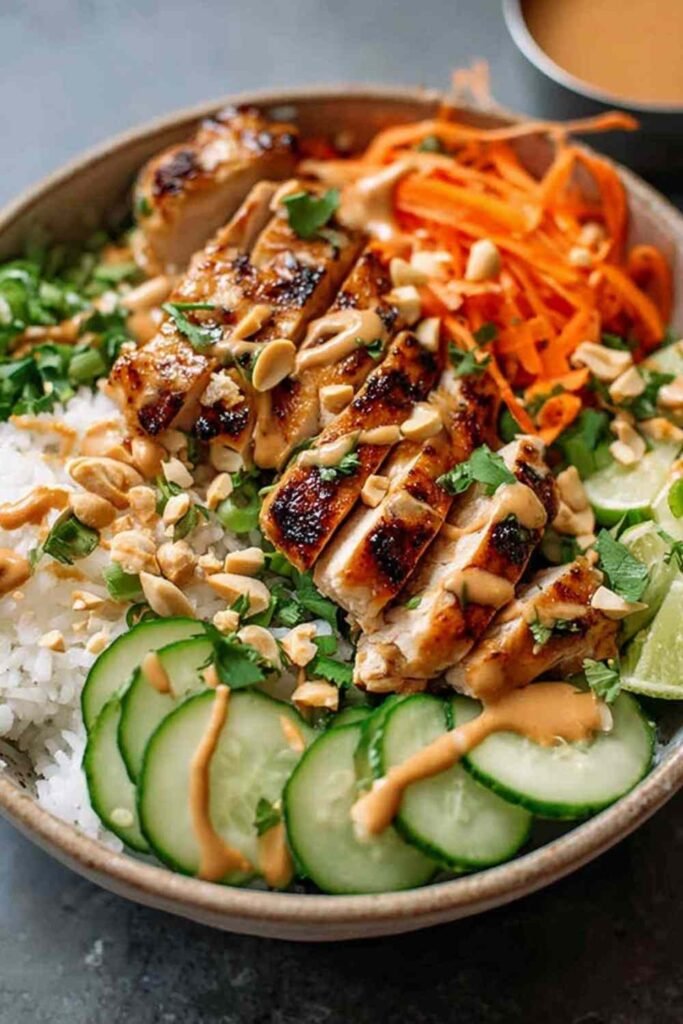
Store all components of your thai peanut chicken buddha bowl separately in airtight containers in the refrigerator for up to 2 days. Keeping the peanut sauce, chicken, vegetables, and rice in separate containers prevents sogginess and keeps the vegetables crisp until you are ready to eat.
To reheat, warm the chicken in the microwave for 60 seconds or in a skillet over medium heat for about 2 minutes. Serve the vegetables cold or at room temperature since they hold their crunch and freshness far better that way. The peanut sauce can go on straight from the fridge.
Pro tip: if the peanut sauce thickens in the refrigerator overnight, whisk in a small splash of warm water before drizzling. It comes back to the right consistency in about 30 seconds.
Frequently Asked Questions
Can I use chicken thighs instead of chicken breast?
Yes. Boneless skinless chicken thighs stay juicier than breast meat and work equally well. Slice them the same way and cook to an internal temperature of 165 degrees F. Cooking time may increase by 1 to 2 minutes per side.
Is this recipe gluten-free?
It can be made gluten-free by swapping the soy sauce for tamari or coconut aminos in the same amount. Everything else in this recipe is naturally gluten-free. Always check your peanut butter label as some brands add soy-based ingredients.
Can I make the peanut sauce ahead of time?
Yes. The sauce keeps in a sealed jar in the refrigerator for up to 5 days. It thickens as it chills so whisk in a tablespoon of warm water before using to bring it back to the right drizzling consistency.
Conclusion
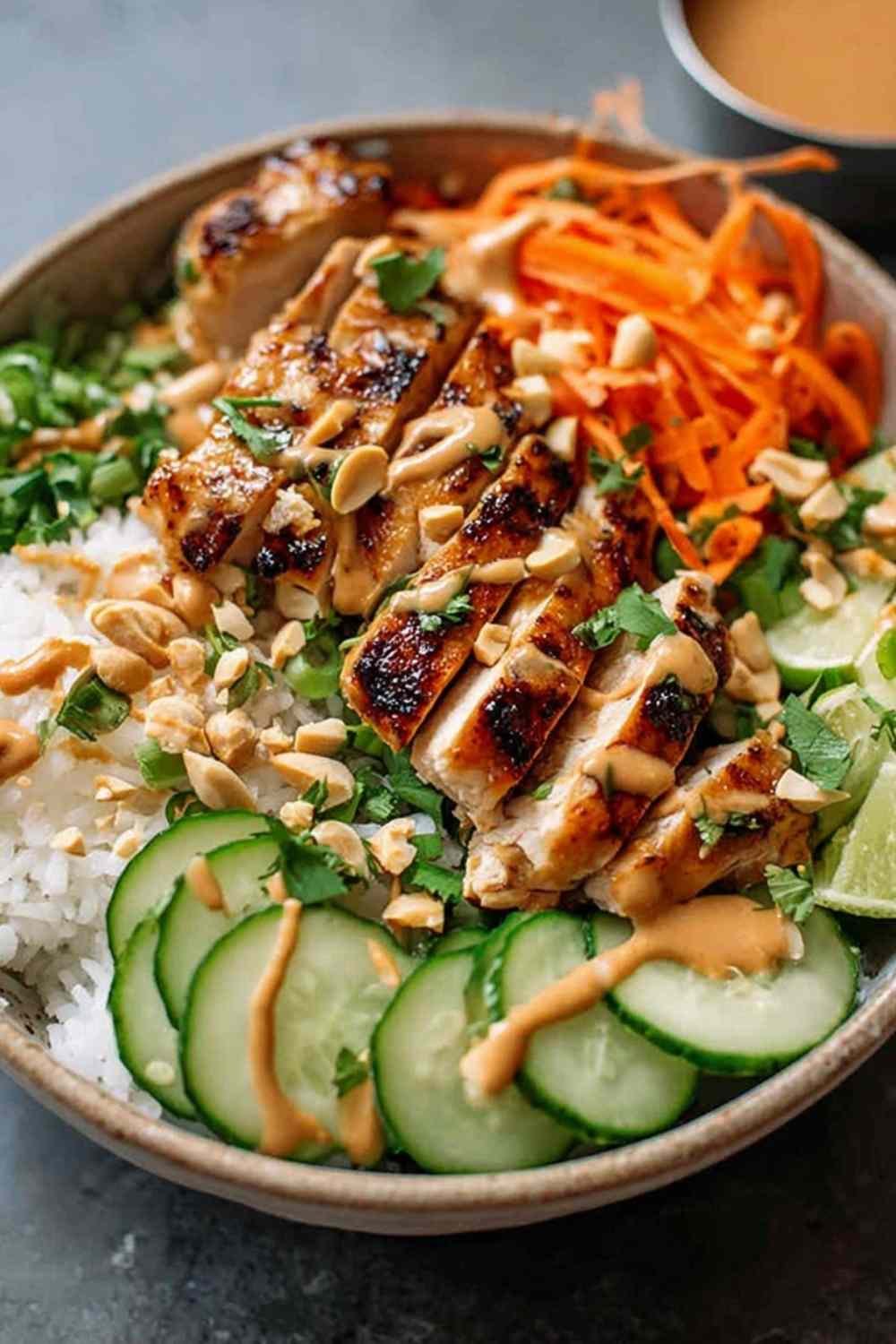
This thai peanut chicken buddha bowl is one of those weeknight dinners that earns its place on the regular rotation fast. It is fresh, filling, high in protein, and comes together in 20 minutes with ingredients you likely already have. Make it once and it will be back on the menu before the week is out.
Thai Peanut Chicken Buddha Bowl
Ingredients
Equipment
Method
- Season sliced chicken strips with garlic powder, ground ginger, salt, and black pepper. Let sit at room temperature for 5 minutes to allow flavors to penetrate the meat.
- Heat olive oil in a large skillet over medium-high heat until shimmering. Add chicken in a single layer without crowding and cook for 3 to 4 minutes per side until golden brown and cooked through to an internal temperature of 165 degrees F with no pink remaining.
- While chicken cooks, whisk together peanut butter, soy sauce, rice vinegar, honey, and sesame oil in a small bowl. Add warm water one tablespoon at a time, whisking after each addition, until sauce drizzles easily from a spoon. If sauce gets too thin, let sit 2 to 3 minutes to thicken naturally.
- Divide cooked rice or quinoa among four bowls, about 3/4 cup per bowl. Arrange carrots, cucumber, red bell pepper, and edamame in separate sections around the base.
- Top each bowl with sliced chicken, about 4 oz per serving. Drizzle with 2 to 3 tablespoons of peanut sauce. Garnish with chopped green onions and sesame seeds. Serve immediately for best texture.