
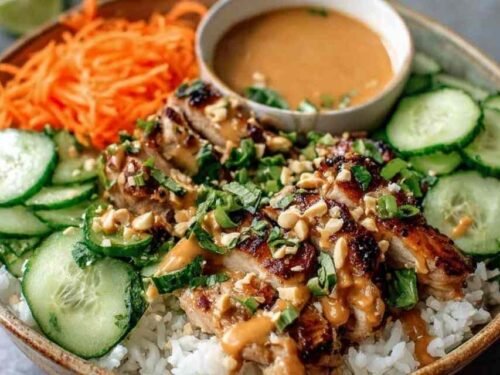
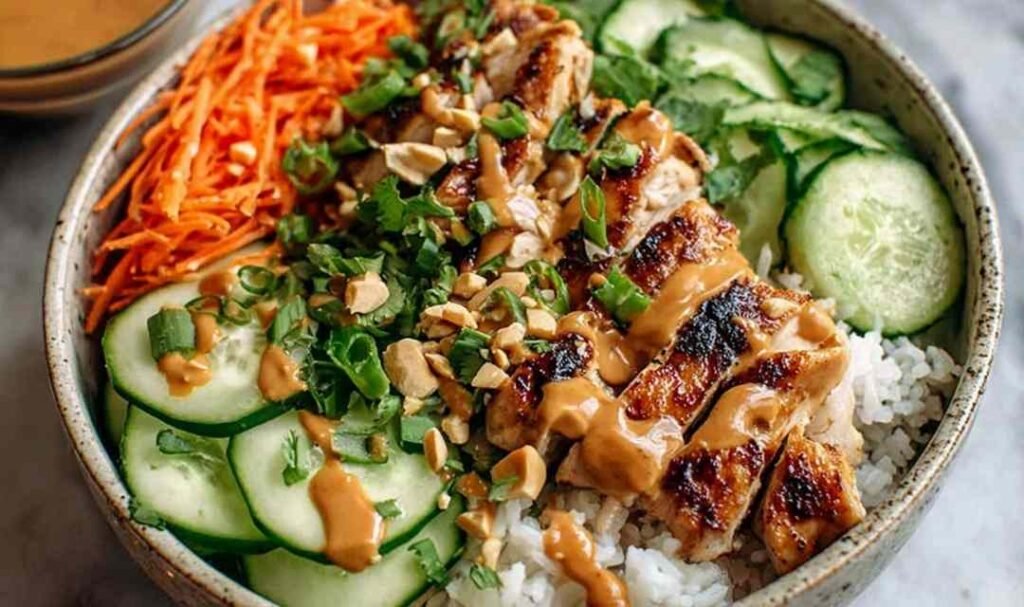
Thai peanut chicken buddha bowl is what I make when the takeout app is open on my phone and I talk myself out of it. The first time I put this together, I honestly did not expect the homemade peanut sauce to taste as good as it did. It took me two minutes to whisk and tasted better than anything I had ordered from a Thai restaurant in months.
This recipe works because it is genuinely fast and genuinely filling. You season the chicken, sear it in a hot pan, whisk the sauce while it cooks, and build the bowls. Twenty minutes from start to table. Each bowl delivers over 30 grams of protein and only 465 calories, which means you are not hungry again an hour later. If weeknight dinners have been feeling repetitive lately, this thai peanut chicken buddha bowl is worth adding to your rotation.
Give this one a try!
Table of Contents
Ingredients for Thai Peanut Chicken Buddha Bowl
I always buy natural peanut butter with no added sugar for the sauce because it blends cleaner and does not taste overly sweet against the soy sauce and rice vinegar. Here is everything you need:
For the Chicken:
- 1 lb boneless skinless chicken breast (sliced into 1/2-inch strips against the grain)
- 1 tsp garlic powder
- 1 tsp ground ginger
- 1/2 tsp salt
- 1/4 tsp black pepper
- 2 tbsp olive oil for cooking
For the Bowl:
- 3 cups cooked brown rice or quinoa (prepared according to package directions, about 3/4 cup per bowl) – I recommend brown rice for a nuttier base that holds up well under the peanut sauce
- 1 cup carrots, julienned or shredded
- 1/2 cup English cucumber, thinly sliced
- 1/4 cup red bell pepper, thinly sliced
- 1/4 cup edamame, shelled and cooked
For the Peanut Sauce:
- 1/3 cup creamy peanut butter, natural preferred
- 2 tbsp low-sodium soy sauce
- 1 tbsp rice vinegar
- 1 tbsp honey
- 1 tsp sesame oil
- 2 tbsp warm water to thin the sauce, added one tablespoon at a time
For Garnish:
- 2 green onions, chopped
- 1 tbsp sesame seeds – in my experience toasted sesame seeds add noticeably more aroma and flavor than untoasted
Step-by-Step Instructions
I recommend prepping all vegetables and measuring the sauce ingredients before you start cooking the chicken so assembly goes smoothly the moment the protein is off the heat.
Step 1: Season the sliced chicken strips with garlic powder, ground ginger, salt, and black pepper. Let the seasoned chicken rest at room temperature for 5 minutes. Do not skip this step. That short rest helps the seasoning absorb into the meat and the difference in flavor is real.
Step 2: Heat olive oil in a large skillet over medium-high heat until the oil shimmers. Add the chicken strips in a single layer and cook for 3 to 4 minutes per side until golden brown on the outside and cooked through to an internal temperature of 165 degrees F. Do not crowd the pan or the chicken will steam rather than sear and you will lose that golden crust.
Step 3: While the chicken cooks, whisk together the peanut butter, soy sauce, rice vinegar, honey, and sesame oil in a small bowl. Add warm water one tablespoon at a time, whisking after each addition, until the sauce drizzles easily from a spoon. If the sauce thickens as it sits, whisk in a small splash more warm water. Do not add cold water as it can cause the peanut butter to seize.
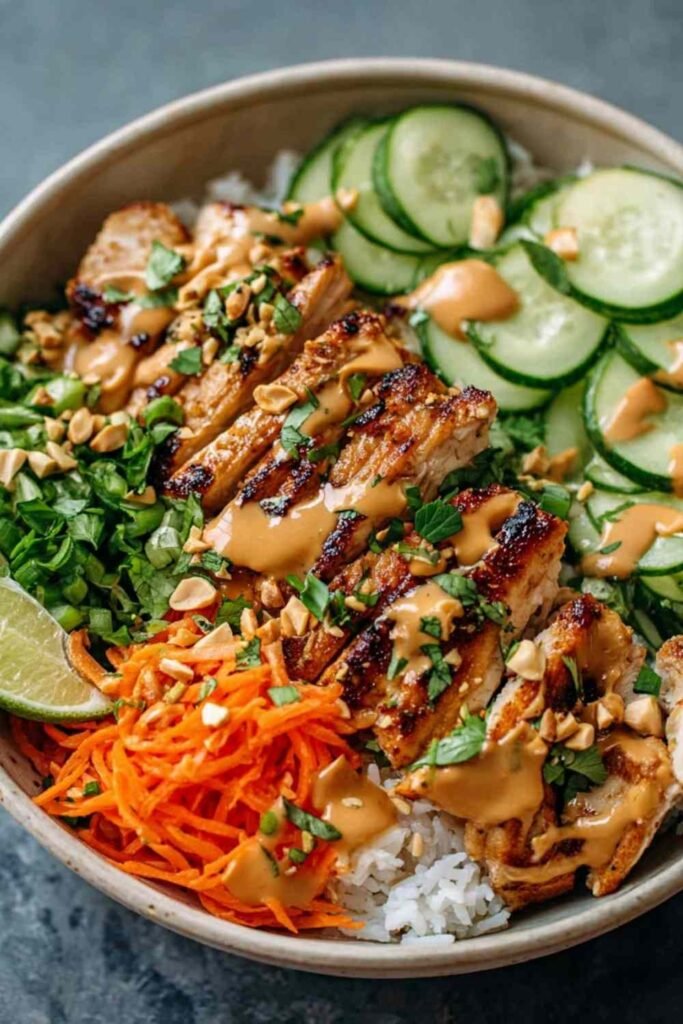
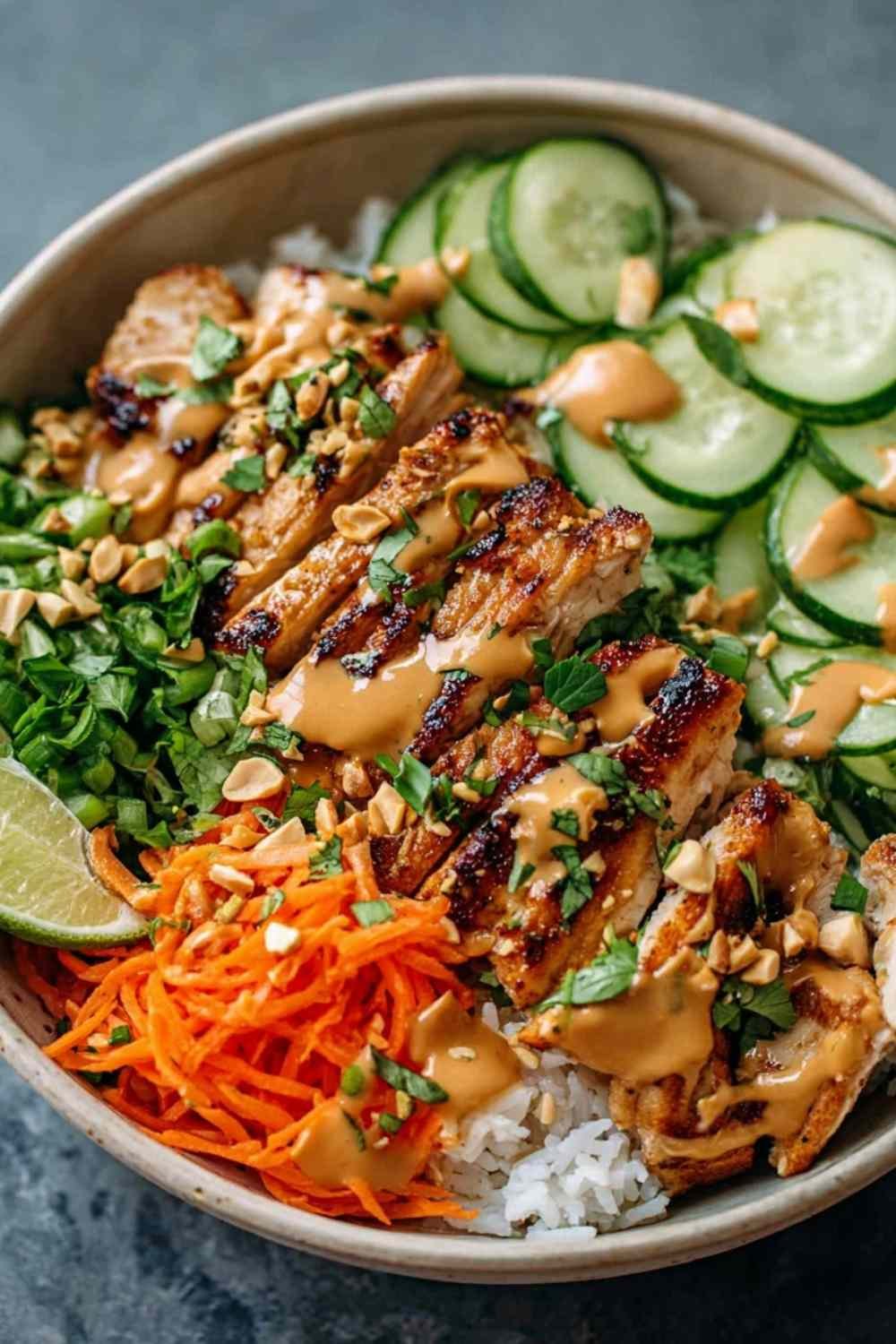
Step 4: Divide the cooked rice or quinoa among four serving bowls, about 3/4 cup per bowl. Arrange the carrots, cucumber, red bell pepper, and edamame in separate sections around the grain. Top each bowl with sliced chicken, about 4 oz per serving, and drizzle 2 to 3 tablespoons of peanut sauce over everything. Finish with chopped green onions and sesame seeds and serve immediately.
Perfect Pairings for Your Thai Peanut Chicken Buddha Bowl
These bowls are a complete meal on their own, but a few simple additions work well for a fuller spread or when feeding a crowd.
Asian Cabbage Slaw: A crisp slaw dressed with rice vinegar and a touch of sesame oil adds crunch and a bright tangy contrast that cuts through the richness of the peanut sauce. It is one of the best sides for a thai peanut chicken buddha bowl when you want extra texture.
Steamed Broccoli: Simple steamed broccoli keeps things clean and neutral. It adds fiber and green vegetables without competing with the bold ginger and peanut flavors already in the bowl.
Miso Soup: A small bowl of light miso soup served alongside makes the whole meal feel like a complete restaurant-style dinner at home. The umami-rich broth complements the peanut sauce without overpowering it.
Coconut Rice: Swapping plain brown rice for coconut rice turns this weeknight bowl into something that feels more special for guests or weekend dinners. The subtle sweetness of coconut rice works really well with the savory peanut sauce.
Cucumber Salad with Rice Vinegar: A quick side salad of thinly sliced cucumber dressed with rice vinegar, a pinch of sugar, and chili flakes adds a cool refreshing element that balances the richness of the sauce between bites.
Keeping Everything Fresh
Store all components of your thai peanut chicken buddha bowl separately in airtight containers in the refrigerator for up to 2 days. Keeping everything separate prevents the vegetables from going soggy and stops the rice from absorbing the sauce before you are ready to eat.
To reheat the chicken, microwave for 60 seconds or warm in a skillet over medium heat for about 2 minutes. Serve the vegetables cold or at room temperature since they hold their crunch and flavor much better that way.
Pro tip: store the peanut sauce in a small separate jar. It keeps well in the fridge for up to 5 days and doubles as a dipping sauce for spring rolls or a quick noodle dressing during the week.
Frequently Asked Questions
Can I use chicken thighs instead of chicken breast?
Yes. Boneless skinless chicken thighs stay juicier than breast meat and work just as well. Slice them the same way and cook to an internal temperature of 165 degrees F. Cooking time may increase by 1 to 2 minutes per side.
Can I make this recipe vegetarian?
Yes. Swap the chicken for firm tofu or cooked shrimp. For tofu, press it dry first, cut into cubes, and pan-fry in olive oil until golden on all sides before adding the seasoning. The peanut sauce works equally well with both.
What if my peanut sauce gets too thin?
Let it sit at room temperature for 2 to 3 minutes and it will thicken back up naturally. Next time, add the warm water more slowly, one teaspoon at a time rather than a full tablespoon, until you reach the right consistency.
Conclusion
This thai peanut chicken buddha bowl is proof that a high-protein, flavorful dinner does not require more than 20 minutes or a long ingredient list. It is fresh, satisfying, and easy enough to make any night of the week. Try it once and it will earn a permanent spot in your dinner rotation.
Thai Peanut Chicken Buddha Bowl
Ingredients
Equipment
Method
- Season the sliced chicken strips with garlic powder, ground ginger, salt, and black pepper. Let rest at room temperature for 5 minutes to allow seasoning to absorb into the meat.
- Heat olive oil in a large skillet over medium-high heat until shimmering. Add chicken strips in a single layer without crowding and cook for 3 to 4 minutes per side until golden brown and cooked through to an internal temperature of 165 degrees F.
- While chicken cooks, whisk together peanut butter, soy sauce, rice vinegar, honey, and sesame oil in a small bowl. Add warm water one tablespoon at a time until sauce drizzles easily from a spoon. If sauce thickens as it sits, whisk in a small splash more warm water.
- Divide cooked rice or quinoa among four bowls, about 3/4 cup per bowl. Arrange carrots, cucumber, red bell pepper, and edamame in sections. Top with sliced chicken, about 4 oz per serving, drizzle with 2 to 3 tablespoons of peanut sauce, and garnish with green onions and sesame seeds. Serve immediately.